The Dawn of Wine Vessels: From Clay to Bronze
The earliest wine drinking vessels in China emerged during the Neolithic period. Archaeological evidence shows that the earliest pottery wine cups appeared during the Dawenkou culture in present-day Shandong province. These primitive clay cups, fired from earth, marked the beginning of a tradition that would evolve into one of the world's most sophisticated ceramic traditions.
By the Shang and Zhou dynasties (c. 1600–256 BCE),
wine vessels had transcended mere utility. Bronze drinking vessels such as jue, gu, and zhi became symbols of power and ritual, integral to ancestral worship and state ceremonies. The taotie mask motifs that adorned these bronze vessels were not decorative whims but representations of mythological creatures, imbuing each cup with spiritual significance. As one scholar observed, these were not everyday items but ritual objects that elevated wine drinking to a sacred act.
The Flourishing of Diverse Materials
As Chinese civilization progressed, so did the materials and techniques of wine cup production. The Warring States and Qin-Han periods saw a gradual shift from bronze to lacquerware, with exquisite painted lacquer cups becoming fashionable among the elite. The Tang dynasty (618–907 CE) marked a golden age for ceramic wine vessels, as porcelain-making techniques reached unprecedented sophistication. Tang sancai (three-color) glazed wine cups reflected the cosmopolitan spirit of an empire open to Silk Road influences.
It was during this era that wine cups began to take forms specifically suited to grape wine. Historical records indicate that the Chinese were already producing wine from grapes over two thousand years ago. The famous poem by Tang dynasty poet Wang Han immortalized the pairing of grape wine with the "luminous cup": "Grape wine in luminous cups shines, as we raise them to lips the lute strikes up fast". These "luminous cups" (yeguang bei) were masterpieces of jade craftsmanship, carved from the beautiful jade of the Qilian Mountains in Gansu province through as many as twenty-eight intricate processes—from selection and cutting to carving, grinding, and polishing. The translucent jade, when filled with ruby-red wine and viewed under moonlight, appeared to glow from within—a visual poetry that defined an era of wine appreciation.
The Song dynasty (960–1279 CE) witnessed the maturation of ceramic wine cup craftsmanship, with kilns across China producing vessels of remarkable refinement. By the Ming dynasty (1368–1644 CE), imperial kilns at Jingdezhen were producing some of the most celebrated wine cups in Chinese history. Among these, the "Chenghua Doucai Grape Pattern Cup" stands as a masterpiece—a porcelain cup with a body so thin it appears almost translucent, decorated with overglaze enamels depicting grapevines in vibrant purple and green. Excavated in Beijing in 1962, this cup represents the pinnacle of Ming ceramic artistry and was specifically commissioned for the imperial court's wine consumption.
The Yuan dynasty (1271–1368 CE) introduced the "high-footed cup" (gaozu bei), a form that would evolve into the modern wine glass stem. Interestingly, this stemmed design—with its practical handle suited for horseback drinking among the Mongol elite—represented a fusion of Central Asian influences with Chinese craftsmanship.
The Glass Revolution and the Rise of the Modern Wine Glass
While glassmaking had existed in China since the Western Han dynasty, with cast glass ear cups appearing as early as the 2nd century BCE, the widespread adoption of glass for wine drinking was a gradual process. For much of history, glass remained a luxury material, as costly as gold and silver, and production techniques were heavily influenced by foreign craftsmen and European Jesuit supervision in palace workshops.
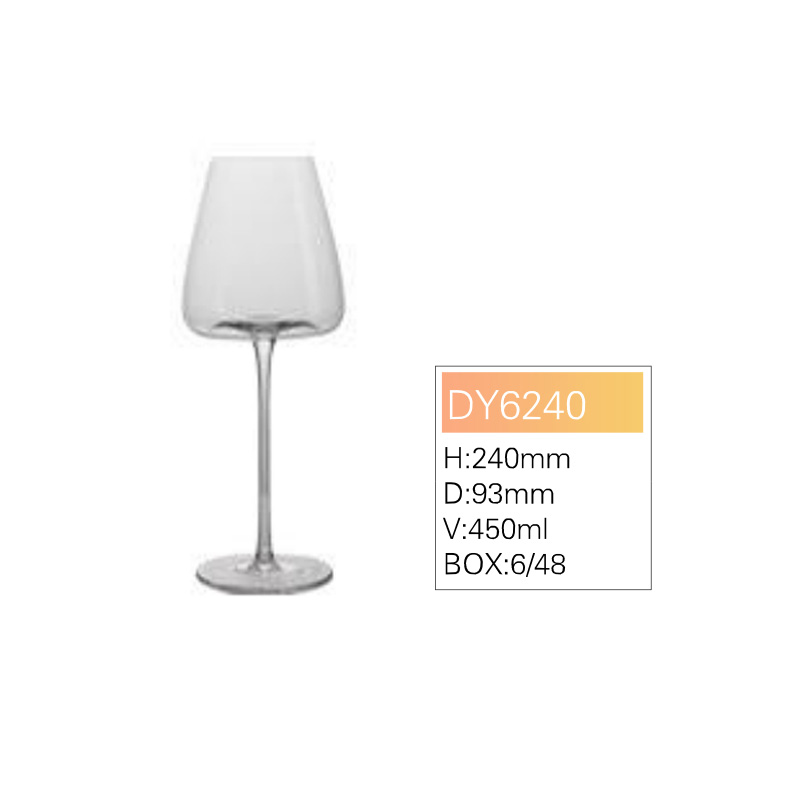
The modern wine glass as we know it—with its bowl, stem, and foot—traces its origins to 15th-century Europe. However, China developed its own parallel tradition of stemmed vessels. The Ming dynasty "high-footed cup" found in Hebei province is considered a prototype of the modern stemware, specifically designed for drinking grape wine.
The late Qing dynasty (1644–1912 CE) marked a turning point. As China opened its ports to international trade, Western wine glasses began appearing on Chinese tables. Historical photographs from this period show Chinese diners using stemmed glassware alongside traditional ceramic cups. The modern wine glass industry in China truly began in 1892, when patriotic overseas Chinese entrepreneur Zhang Bishi founded the Changyu winery in Yantai, Shandong province, investing three million taels of silver to produce China's first commercial wines. The introduction of commercial winemaking naturally brought with it the need for proper glassware.
Contemporary Craftsmanship: Tradition Meets Innovation
Today, the Chinese wine glass industry has evolved into a sophisticated sector valued at over 25 billion yuan annually. The market has transitioned from viewing wine glasses as mere "functional tools" to embracing them as "experiential carriers" of wine appreciation.
Contemporary Chinese craftsmanship draws on both ancient traditions and modern innovation. Some brands continue to honor time-honored techniques—for instance, the DEESSE brand, established in 2019, employs twelve handcrafted processes to produce its wine glasses, with one collection requiring three rounds of mold improvements and two years of research and development. Using borosilicate glass as an alternative to traditional materials, these artisans create everything from hand-engraved patterns to gradient finishes.
The handcrafted crystal glassware movement has also gained momentum, with brands like "Kailuoshi" specializing in handmade lead-free crystal wine glasses. Each piece is entirely crafted by skilled artisans, embodying what is called the "spirit of Chinese craftsmanship" (jiangxin).
Cultural Integration and Future Directions
The globalization of wine culture has brought international brands like Riedel to China, where a single wine glass can retail for 300 to 3,000 yuan. Yet Chinese brands are not merely imitating Western designs—they are creating distinctly Chinese expressions of wine glass aesthetics. Some brands collaborate with cultural institutions like the故宫 (Forbidden City) and the National Library, infusing traditional Chinese artistic motifs into contemporary glassware designs.
Looking ahead, the industry is embracing intelligent technologies, with concepts like temperature control, aroma release adjustment, and app-connected smart glasses on the horizon. Sustainability is also becoming a priority, with manufacturers exploring recyclable and biodegradable materials.
Conclusion
The story of Chinese wine glass craftsmanship is a mirror reflecting the nation's cultural journey—from the ritual bronze vessels of the Shang dynasty to the translucent jade cups praised by Tang poets, from the exquisite porcelain of Ming emperors to the precision-engineered glassware of today's global market. Each era has left its mark, not as a replacement of tradition but as an evolution of it. The Chinese wine glass, in all its forms, remains what it has always been: a vessel not just for wine, but for culture, artistry, and the human desire to elevate the simple act of drinking into an experience of beauty.


 The Paradox of Toughness: How Tempered Glass Turns Internal Tension into Everyday Safety
 The Alchemy of Color: How Metal Oxides Turn Sand into Stained Glass, Ruby Red, and Cobalt Blue
 Libbey: The Glassmaker That Built American Drinking, Then Learned to Disappear
 Hot Cut vs. Cold Cut: What a Glass Rim Really Tells You


